Sunday, 2 April 2017

Leo Geyer Conducts The EMG Symphony Orchestra Fiftieth Anniversary Concert Exeter Cathedral Saturday 1 April 2017

Leo Geyer
Debut with EMG Symphony Orchestra

On Saturday evening at Exeter Cathedral, Leo Geyer introduced himself without preamble as he and the EMG Symphony Orchestra launched into Arturo Márquez' Danzon No 2 in front of a capacity audience. Initially swelling to frenetic intensity, the dance also had moments of relative calm. The overall direction, however was towards extreme excitement. In the end, it was as if a carnival had marched into the nave of the cathedral.

In passing, it is essential to acknowledge the gorgeous interludes provided by Catherine Clements and the flutes (with a very special piccolo obbligato for Rob Stephenson), the trumpeters Miles Taylor & John Bowden, and Leader Clare Smith's violin cadenza with the full string section. Behind all this was an amazing array of percussion. Alfie Pugh was in charge with the help of Ali Board (timpani), Tony Hindley (bass drum), Gary Evans (drum kit), Charlie Hindley, and Zoë Fitzsimmons anchoring the whole performance with her rhythmic wood-block.

To delighted applause, Leo left the stage - only to return and, still without a word, amazed everyone again with George Gershwin's "An American in Paris". The unique feature of this piece is the four 'tuned car horns', which Alfie Pugh had cleverly re-invented with precisely adjusted card inserts. Charlie and Zoë took charge of the horns, while Alfie provided spectacularly inticate bursts on the xylophone.

In all the hustle and bustle of the metropolis, there was also time for a magical violin solo by Clare Smith - joined by David Lotinga on Cor Anglais. There was also another seductively sweet trumpet passage for Brian Moore. There is one very special moment for the tuba, a brief but impressive phrase in isolation, which went to the orchestra's long-standing tuba king, Rob O'Byrne.

After the crashing climax of the Gershwin, the audience were able to mingle with the performers in the South Transept, where mini bottles of wine were on sale - a new and very popular innovation.

The EMG Chairman, violist Rachel Wieck, said a few words on behalf of the orchestra before the second half of the performance got under way. She gave a special mention to Judith Harris-Deans' saxophone section, Rachel Lennon's E flat Clarinet, Peter Dawson's contrabassoon, and the welcome return of the Dartington celeste (brought north by bass clarinettist John Welton in time for Thursday's rehearsal) which was played by 'cellist Carol Galton. She could hardly avoid mentioning the astounding array of percussion instruments ranged across the entire top tier of the orchestra's staging, defying anyone to mention a percussion instrument NOT included in the line-up.

The bass drum player for the night, trumpeter Tony Hindley, got credit as Leo's Associate Conductor for this inaugural concert. Rachel also had news of two more events coming up in the late spring and early summer. On Saturday 20 May the orchestra will give a morning recital in the semi-al-fresco Princesshay shopping complex, and on Saturday 24 June there will be an afternoon matinée at St Peter's School on a fantasy and fairy-tale theme, both to raise funds for Children's Hospice South West.

There was also the tragic and poignently ironic news that founder EMG member, 'cellist Professor Christopher Holdsworth, after an illness which prevented him from participating in Leo's first project, died on the morning of this, the fiftieth anniversary concert of orchestra he had supported and been a part of for nearly all of that time. Chris will be sadly missed.

Fittingly, this sad news was mitigated by the introduction of something unique and new into the evening's programme. Leo added to the Latin/American dance and jazz feel of the evening with his own composition, "Aruanda". The word Aruanda has found it's way into the language of Brazil as a corruption of 'Luanda', the capital of Angola and the last sight of Africa for prisoners abducted and transported to Brazil as slaves. For their descendants Aruanda now suggests a lost paradise longed for, almost a religious heaven.

Although still riven with synchopated dance rhythms, "Aruanda" was a very tender contrast to the excitement and effusiveness of the preceding pieces. Each section, and some solo instruments, pulled this way and that with a compelling sense of yearning, overlapping in complex counterpoint. Every player had to be precisely in control of their own part of the story - which they all did with the impeccable precision so familiar to EMG fans. Under the direction of the composer, Leo Geyer, a very special spell was woven in sound which left a very favourable, and memorable, impression.

Having softened the mood, Leo and the orchestra rekindled the fire of expansive dance with Leonard Bernstein's Symphonic Dances from "West Side Story". More than just dance tunes, this suite tells the familiar story of a tragic love torn apart by partisan loyalties - in this case, the gang culture of 50s New York. Gentle sentimental themes developed slowly at first, until Alfie Pugh's cow-bell called time on romance and things started to really hot up. "Mambo!" cried the whole orchestra as every section roared into action. Gary Evans was having the time of his life at the drum kit - a dream for any percussionist.

The sensitive sound of Carol Galton's celeste, when it came. was an absolute delight - augmented by Alfie's glockenspiel. And Gary's brush-work on the drums was the slinkiest sound of the evening, unstoppably precise and smoothing the wild violence of the other instruments. Brian Moore and the trumpeters were incredible in the energy they injected into the music. Sally Maya, principal French horn, countered that with her own haunting solo performance, leading into the final dying beats of Isabelle Woolcott's double basses.

The audience had been given a very special treat that evening, and were more than willing to join in an experimental encore suggested by Leo from the podium. After a little practice, the whole audience responded to Alfie's cow-bell with a unified cry of "Mambo!" along with every member of the orchestra, and the dance began again. If there was one part of the evening's music that was crying out for a repeat performance, that was it. The perfect rousing finale to Leo Geyer's debut engagement with the EMG Symphony Orchestra.

Former EMG Musical Director, Marion Wood, had made a special trip to England to hear the concert, and I hope she would agree. The magic continues.

East Devon Choral Society J S Bach St John Passion Saturday 25 March 2017 (Abstract)

East Devon Choral Society
St John Passion

Andrew Daldorph and the East Devon Choral Society were working for twelve weeks to prepare for one night of music. On Saturday 25th March the choir performed J S Bach's "St John Passion" to a full house at Tiverton Baptist Church. Fiona McLean Buechel led the orchestra and seven professional soloists arrived to sing the arias. Josh Cooter was the Evangelist.

The hundred-strong choir sang with enormous energy and intense emotion. The opening chorale set the scene perfectly, and Josh Cooter's narration linked seemlessly with the massed responses of the choir. "Who are you seeking?" - "Jesus of Nazareth!" That marvelous energy was maintained all evening and, at the focal moment, the death of Jesus, the hall fell silent and you could hear a pin drop.

The resolution - this death is actually good news for mankind - leads into the final loving requiem to Jesus, " Ruht Wohl" (Rest in Peace). The mood by the end was overwhelmingly intense. As the final words, "Ich will dich preisen ewiglich!" (I will praise you eternally!) drew to their reverential close, the audience were totally with the choir to the very last note.

What a wonderful experience. Andrew Daldorph and the East Devon Choral Society, as always, have put in a spectacular amount of work to bring us a glorious rendition of Bach's master work. Many thanks to all involved.

East Devon Choral Society
Organist: Colin Pettet  
   Conductor: Andrew Daldorph


The magic continues with a concert of mixed music at a new venue in North Devon - All Saints Church in Dulverton - on Saturday 13th May. The title is "Colours of Love", and the early evening workshop concert will include music from the last five centuries, from the reign of Elizabeth I up to the present day. Good News.


Thursday, 30 March 2017

London Bridge Trio Courtenay Centre Newton Abbot Friday 21 April 2017 Press Release from Anne White Newton Abbot & District Society of Arts (NADSA)

London Bridge Trio

Nadsaconcerts brings its 71st season to a close on Friday 21st April, 7:30pm, (at the Courtenay Centre, Newton Abbot) with a performance from the London Bridge Trio (violin, cello, piano).
One of Britain's most exciting piano trios, it is noted for its deeply nuanced and searching interpretations. With their composer-led programmes, they perform frequently in London at Wigmore Hall, Kings Place and St John’s Smith Square.

Unlike many concerts, where the audience hears compositions with a wide geographical or chronological overview, the London Bridge Trio will immerse themselves, and us, in a small part of one decade: the tempestuous late 1840s. They will bring us the creations of three monumental figures of the Romantic period composing in the musical hub of Leipzig at that time: Schumann, Clara Schumann and Mendelssohn.

In their concert, the London Bridge Trio will perform 3 works: Schumann's Fantasiestücke for Cello and Piano (1849), Mendelssohn's Piano Trio No. 2 (1846), and Clara Schumann's wonderful, though rarely heard, masterpiece of 1846. 

The London Bridge Trio, one of Britain's most exciting piano trios, is noted for its deeply nuanced and searching interpretations. With their composer-led programmes, they perform frequently in London at Wigmore Hall, Kings Place and St John’s Smith Square. In this concert, they present 3 works from the 1840s including Clara Schumann's wonderful, though rarely heard, masterpiece of 1846. This is your chance to catch it!

Violin: David Adams
'Cello: Kate Gould
Piano: Daniel Tong

Robert Schumann: Fantasiestucke for 'Cello & Piano Op 73
Clara Schumann: Piano Trio in G minor Op 17
Felix Mendelssohn: Piano Trio No 2 in C minor Op 66

Tickets: £15 (advance £13 student/child £3)


Newton Abbot & District Society of Arts
London Bridge Trio
Courtenay Centre Newton Abbot
Saturday 21 April 7.30pm
LONDON BRIDGE TRIO
Violin: David Adams
'Cello: Kate Gould

Piano: Daniel Tong
Robert Schumann: Fantasiestucke Op 73
Clara Schumann: Trio in G minor Op 17
Felix Mendelssohn: Trio in C minor Op 66
Tickets: £15 (advance £13 student/child £3)
Box Office: 01626 368318
Online Bookingnadsaconcerts

Wednesday, 29 March 2017

Andrew Daldorph and East Devon Choral Society Bach St John Passion Tiverton Baptist Church Saturday 25 March 2017

East Devon Choral Society
Musical Director: Andrew Daldorph


Leipzig
Nikolaikirche
As the Christian observance of Lent passes the half-way mark and the festival of Easter approaches many prepare for the celebration of the greatest Christian mystery, resurrection, with idiosyncratic self imposed penances and acts of contrition. After a traditional blow-out of pancakes, even non-christians often embark on forty days of privation.


Johann Sebastial Bach
In 1724 Johann Sebastian Bach, having just taken up a new post at St Thomas' Church in Liepzig, dedicated Lent to the preparation of music for a definitive Passion service - which was relocated to St Nicholas' Church at the last minute. In addition to an Easter sermon for Good Friday, the service included the story of Christ's trial and execution, as described in the John Gospel, presented in song by a series of vocal soloists.


Evangelist:
Josh Cooter
Some sang the words of Jesus and the other characters. Some sang arias reflecting the mood of the story. One in particular, The Evangelist, sang the narrative of the Gospel as recitative. Most important, bracketing and amplifying the significance and mood of every part of the story, were the chorales sung by the choir.


Conductor:
Andrew Daldorph
Following three centuries of tradition, Andrew Daldorph and the East Devon Choral Society dedicated their Lent to preparing for their own performance of the St John Passion. Work started, not on Ash Wednesday (1st March), but immediately after Epiphany (6th January). For twelve weeks the choir members have been practicing their parts, and rehearsing regularly at Old Heathcote School, for a public performance on 25th March.


Orchestra Leader:
Fiona McLean Buechel
On the day they were joined by the usual orchestra of superb instrumentalists from across Devon. Fiona McLean Buechel was leading, with a team of six violinists.


Violas:
Jim Swainson
David Newland
Three violas and two 'cellos were joined by the double bass of Graham Tuck.
Candice Regan returned to play flute, and Andrew Maries was joined by Catriona Jackson playing oboe - with Andrew Garton icing the cake with his melifluous bassoon playing.


'Cello solo:
Michael Dawson
In the 'cello section was Hilary Boxer's former 'cello student Michael Dawson who, when he was still a schoolboy, so skilfully accompanied the choir's rehearsals on the piano.


'Cello duet:
Michael Dawson
Tirke Linnemann
Michael has now graduated in Engineering at Oxford University, and is preparing his PhD thesis in Aerospace Engineering at Cambridge. Equally accomplished as a musician, Michael took charge of the 'cello part and, with Tirke Linnemann, shone in the solo and duet parts.


Organ:
Colin Pettet
As the evening was a concert, not a service, there was no sermon. Instead, Colin Pettet installed his chamber organ in the pulpit where he could interact directly with Andrew Daldorph conducting on the rostrum.


and choir


In the Baptist Church the pulpit is central, and the choir were packed around Colin on all sides - with some altos and sopranos singing down from the galleries above. The audience filled the remaining gallery space, and the nave and aisles, for a very intimate evening of shared music.


Director of Music: Andrew Daldorph


Herr, Unser Herrscher . . .


Opening Chorale:
"Herr Unser Herscher"
Following the gentle and intriguing introduction by the orchestra, the choir ignited the mood of the evening immediately with one of Bach's best known chorales - in German. The opening is a generic exposition of the Christian's abject devotion to the Saviour Jesus Christ.


Altos
The English 'Lord' is expressed as the more mundane 'Herr' in German, a business title equivalent to 'Mr.' In Bach's hands, however, the repeated and increasingly forceful iteration of this single word, and its emphatic form 'Herrscher', impress on the audience the significance of this particular 'Herr', whose name will be known and revered in every land.


Altos
Sopranos
Basses


More Passion
In an overwhelming canon, the different sections of the choir built the mood to a crescendo of emotion before (in familiar Bach style) fading to leave the soft sound of the orchestra. But, most exciting of all, just when all seemed complete, a slight crescendo from the orchestra introduced the choir again, and the whole performance was repeated with even more enthusiasm than before.


Evangelist:
Josh Cooter
That opening chorale was worth the price of admission in itself but, as the final chord faded, Josh Cooter stepped forward to begin his exposition of the St John Gospel. His sweet tenor voice took us through the words of the Gospel in such perfect German that the English translation, provided in the programme notes, was hardly needed.


Jesus:
Julian Sutton
When the choir, now playing the part of the crowds in Jerusalem, called for Jesus, Julian Sutton stepped forward and pronounced in his commanding bass voice, "Ich bin's" - and, after a little profound quizzing by the crowd about his identity, the choir express their great love for him in another chorale.


Soprano:
Bethany Partridge
In similar vein, the rest of the evening passed with each part of the Passion story from the John Gospel illustrated by chorales and arias. Bethany Partridge sang the soprano arias, including the words of Simon Peter, "Ich folge dir gleichfals" (I also follow you - with joyful tread) which she had sung so memorably in her solo recitals when she was still at school.


Alto:
Helen Charlston
Bethany is also a graduate now, having taken Music at Cambridge, and works as a freelance singer in London - performing with Musical Directors like Nigel Short and the Tenebrae Singers. Bethany was joined by her fellow student Helen Charlston, who sang the alto arias. Together they now sing with Paul Jeanes and the Amici Chamber Choir in London.


Tenor:
Guy Withers
A new voice, Guy Withers, took on the tenor parts, and East Devon Choral Society regular, and Exeter Cathedral Choir member, Tim Mirfin, sang the bass.


Bass: Tim Mirfin


Simon Peter:
Alex Scott
Pilate:
Matthew Cann
Choir members took up some of the minor parts in the narrative, with Alex Scott playing the part of Simon Peter, and Dave Regester the part of Caiaphas' insolent servant. George Daldorph's treble voice made a special appearance as the maid to whom Peter denied his master. One last part needed to be filled - Pontius Pilate - and that was very ably performed by another Exeter Cathedral Choir bass, not to mention choral composer and Musical Director of the Antiphon Choir, Matthew Cann.


Chorale:
"Ruht Wohl"
With the choir in spectacular voice, the story unwound in a captivating two hours of magical drama. With Andrew Daldorph's deft direction, the hundred voices mingled in a thousand different ways to mesmerise the audience and, in keeping with the theme of the evening, imbued every aspect of the story with immense Passion.


Chorale:
"Ich will dich  
preisen ewiglich!"
It was hard to know where to look. The magnificent multitude of the East Devon Choral Society, all in formal evening dress, were actively engaged throughout, bombarding the air with melody and rhythm, and excitement, from every angle.


Soloists join the choir
for the final chorale
Bass: Tim Mirfin
Tenor: Guy Withers
Alto: Helen Charlston
Soprano:
Bethany Partridge
The evening was a splendid success, and everyone involved deserves special credit for creating such a wonderful spectacle, and bringing a chilly spring evening to life with their recreation of this marvellous baroque masterpiece.


A glorious conclusion


East Devon Choral Society
Chairman:
Martyn Green


Special Guest:
Bethany Partridge
with soprano
Sally Daldorph

Friday, 24 March 2017

East Devon Choral Society St John Passion Tiverton Baptist Church Saturday 25 March 2017

East Devon Choral Society

East Devon Choral Society
Tiverton Baptist Church
Saturday 25 March 7.30pm
J S BACH "ST JOHN PASSION"
Musical Director: Andrew Daldorph
Orchestra Leader: Fiona McLean-Buchel
Evangelist: Josh Cooter
Soprano: Bethany Partridge
Alto: Helen Charlston
Tenor: Guy Withers
Bass: Tim Mirfin
Jesus: Julian Sutton
Pilate: Matthew Cann 
Tickets: £10 (child £4)
Tiverton Tourist Info: 01884 230878
Further Details: 01884 253494

Billy Bottle & The Multiple "The Other Place" Barnfield Theatre Sunday 2 April 2017

Billy Bottle & The Multiple
Lee Fletcher, Martine Waltier, Billy Bottle, Vivien Goodwin-Darke, Roz Harding

Billy Bottle & The Multiple
Clifford Room Exeter Barnfield
Sunday 2 April 7pm
THE OTHER PLACE
Pre-Recording Warm-Up Gig
                          Voice, Guitar, Keyboards, Singing Bowl: Billy Bottle    
                                             Voice, Violin, Guitar, Xylophone: Martine Waltier    
                                                  Voice, Flute, Recorder, Xylophone: Vivien Goodwin-Darke    
            Alto Sax, Xylosax, Recorder, Bongos, Shaky Egg: Roz Harding    
Synthesiser, Soundscapes, Bodhran, Xylophone, Thermos: Lee Fletcher    
Tickets: £12 (advance £10 MU/NUS £6/5)
Box Office: 271808 (10-4 Mon-Fri 10-2 Sat)
Online BookingTicketSolve

Wednesday, 22 March 2017

An-Ting Chang Piano Recital "The Carnival of the Animals" Glenorchy United Reformed Church Exmouth Wednesday 22 March 2017

An-Ting Chang

An-Ting Chang's advance programme for today's lunchtime concert at Glenorchy (previous post on this blog) attracted unprecedented interest. "The Carnival of the Animals" was clearly going to be a tour de force of animal-themed excellence not to be missed.


Les Jeux D'eaux À La Villa D'Est
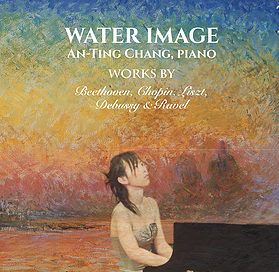
Listeners to Soundart Radio last Friday morning heard an extract from An-Ting's "Sonata Movements" concerts (Mozart Piano Sonata III) and music from An-Ting's album of piano works "Water Image" (Franz Liszt's "Les Jeux D'eaux À La Villa D'Este"), plus an interview with An-Ting herself, back in 2014, when she presented her collaboration with Russell Bender "Classical Collision" at the Barnfield Theatre in Exeter (Shakespeare's "Romeo & Juliet" versus Maurice Ravel's "Rite of Spring" 1 May 2014).


Classical Collision 2014
An-Ting is just completing her PhD in Performance Practice at the Royal Academy of Music. ("Classical Collision" was just a side-line!) As an undergraduate she studied Chemistry and Drama at National Taiwan University. "Classical Collision" was a brilliant combination of drama and music, as was the follow-up Arts Council funded project "Kiss of the Earth". An-Ting also excels at solo performance, as we were soon to discover.

Jill Govier
David Lee, organiser of the Lunchtime Concert series at Glenorchy Church, was there for An-Ting's rehearsal on the Venables grand piano this morning, and was immediately impressed by An-Ting's virtuoso playing. Jill Govier, who played duets with David at last week's concert, was in the front row to hear this new sound, and the hall was soon packed with an expectant audience of music lovers.


An-Ting Chang
The recital was planned and executed with military precision. In just forty five minutes An-Ting deftly presented animals that fly, animals that swim, and highly entertaining pet cats and dogs, with time left for her own arrangement of Camille Saint-Saëns' "Le Carnival Des Animaux". The explanations before each set were clear and engaging, and drew attention to the special features of each piece (which An-Ting had perfected).


Louis-Claude Daquin
The first flying animal was baroque French composer Louis-Claude Daquin's "Cuckoo" from the early eighteenth century. Immediately the very special skills of today's visitor became apparent. The simple motif of the cuckoo's call was deftly interwoven with spectacularly complex embellishment. In a moment the mood changed with the first of two romantic pieces from the late nineteenth century.


Enrique Granados Campiña
"Quejas, ó la Maja y el Ruiseñor", composed by Enrique Granados, and inspired by a painting by Francisco Goya, introduces a gentle interaction between a young woman and a nightingale. We had been warned, however, that all is not as tranquil as it seems. Off stage, jealous lovers fight to the death for the maiden's affection. The combination of horror, tragedy and beauty were simply and skilfully conveyed, creating a magical atmosphere.


Nicolai Rimsky-Korsakov
The more fantastical tale of Prince Gvidon being transformed into a flying insect to join his father on his ship at sea, is the most familiar scene from Nicolai Rimsky-Korsakov's opera "Tsar Saltan", having been performed by virtuoso instrumentalists on nearly every instrument. Sergei Rachmaninov's definitive piano version, offered another chance to witness An-Ting's phenomenal dexterity and energy as her incredibly flexible fingers flew over the keys. Too short, of course, - but absolutely delightful.


Franz Schubert
Franz Schubert's "Trout" has gained a popular image of pastoral tranquility, but Schubert's original song is, like Granados' "Nightingale", a somewhat darker tale. The poor trout is played on a fisherman's line, and ultimately dies an agonising death. Franz Liszt bowdlerised the story in his piano transcription - but Schubert's original intentions can still be heard. The competing impressions in An-Ting's performance once again created something quite unexpected.


Poissons d'Or
Claude Debussy's "Poissons d'Or" is often, and quite naturally, misinterpreted as a musical description of goldfish. An-Ting even obtained an aquarium of goldfish as inspiration for her performance. However, she was soon reminded that goldfish are 'poissons rouges' in French. Debussy was referring instead to the two rather stylised golden coy carp depicted in a Japanese lacquer-work painting in his study, and "Poissons d'Or" was the third of his "Images" (bells, moon, fish) composed for pianist Ricardo Viñes.


Claude Debussy
An-Ting's muscular representation of the vigorous carp was framed by the gentle oscillation of water weed and fins that Debussy had in mind.


Frédéric Chopin
More familiar pieces with a less familiar inspiration followed. Two waltzes by Frédéric Chopin were inspired by the pets of Aurore Dupin (better known as author George Sand). The first was the 'Little Dog Waltz' also known as the 'Minute Waltz' (minute as in miniature) which was composed at Aurore's suggestion, to represent her dog Marquis chasing his tail in the garden.

Amantine-Lucile-Aurore Dupin
Aurore's cat Valdeck also features, in the 'Cat Waltz' inspired by the the cat's very natural inclination to try to get involved in whatever Frédéric was doing - particularly the fascinating activity of playing the piano.

The familiar Minute Waltz took on new life, with the complex trills taking second place to the playful antics of the little doggie. Valdeck was even more audible, dislodging the music, mewing piteously, and even running up and down the keyboard. Skilfully done - and such fun!


Aaron Copland
In a similar vein, Aaron Copland's "The Cat and the Mouse" was an immediate hit and taken up by Claude Debussy's publisher Jacques Durand when Aaron was only twenty years old. Twenty years later, Scott Bradley appropriated Aaron's style (along with others, notably George Gershwin) for his unforgettable scores to Fred Quimby's "Tom and Jerry" cartoons (actually the work of William Hanna & Joseph Barbera). Hanna and Barbera were so faithful to the original works that their animations immediately spring to mind when listening to the music. I'm sure Aaron approved.

William Hanna & Joseph Barbera
"Tom & Jerry" 1940
He would also have approved of An-Ting's take on this classic chase-scene on the keyboard. Every kind of suspense, surprise and pratfall is represented in music. An-Ting tells the story with all the excitement and energy Copland intended - right up to the final sound of scampering feet, indicating the mouse's final successful bid for freedom, we hope.

The 'main dish' of the recital was still to come, however.


Camille Saint-Saëns
Camille Saint-Saëns lived just long enough to have heard Copland's "Cat and Mouse" in 1920. Thirty four years earlier, for the amusement of his own students, he had composed his own animal-based bagatelle (when, by his own admission, he should have been concentrating on his Third Symphony). Never intended to be part of his recognised canon, "Le Carnaval des Animaux" was also published by Jacques Durand, two years after "The Cat and the Mouse", and is now Saint-Saëns' best known work. It is not clear whether he would have approved!

The original was composed for an informal ensemble of student musicians, including two pianists, a xylophonist and glass armonica player. Modern interpretations may involve a whole string section, but the armonica is often replaced by a glockenspiel.

Specially for today's concert, An-Ting had prepared her own solo piano arrangement of an abridged selection from the original fourteen movements, omitting the Kangaroos, the Characters with Long Ears, and - unexpectedly - the Pianists. This left a magnificent cavalcade of beasts, however.

The Lion, the Hens & Roosters and the Asses were fantastically full of life and used the dynamics of the Venables to its full potential. The Tortoises were something else altogether - slowly and lugubriously performing Jacques Offenbach's Can-Can, so slowly indeed that one has to listen carefully to hear the dance rhythm at all.


The Elephants are ponderous and LOUD, but also capable of gentleness, the kind of contrast which An-Ting exploits to its full potential. The Aquarium ripples with mysterious silence - in the form of sound. So gentle and so sweet, a lovely interlude. The woodwind scales were cleverly replaced by glissandi on the piano.

Then came a very mysterious sound, quite confusing as it was not listed on the programme, but soon the distinctive voice of the cuckoo made all clear - a bonus movement! The Cuckoo was followed by all the birds of the Aviary, and then the familiar melody of Saint-Saëns earlier composition "Danse Macabre" composed twelve years earlier - but now resurrected as the Fossils. In An-Ting's hands those relics were gloriously re-animated, if anything they were even more lively than the live animals in the other movements!


The gentle but equally energetic Swan led into a magnificent Finale. With an impressive eye for the dramatic, An-Ting built on the energy and excitement right up until the final crescendo, closing to a tumult of adulation and applause. In a scene rarely witnessed at Glenorchy, everyone was standing and showing their appreciation as An-Ting made her curtain call.

What a show. David and Jill were utterly thrilled by the piano virtuosity of the new performer, as were the entire audience.

The best news of all is that Mike Gluyas was there to record the whole concert, and An-Ting took part in a short recorded interview after the performance. We can hear those recordings soon on the "Classical Journey". The album "Water Image" was also available at the venue - and we'll be enjoying tracks from that too.


Kings Weston House
An-Ting's next project, now well under way, is a production of Anne Brontë's "The Tenant of Wildfell Hall" in 'collision' with the music of Mozart, Brahms & Scriabin.

The run will visit a series of art galleries across the country - to
Kings Weston House
Music Room
add visual images to the combination of literature and classical music. The opening night is Wednesday 26 April at King's Weston House in Bristol, and there will be a second performance at the same venue the following night - before the show moves to London. (But it will be returning to Bath in May.)


An-Ting is very keen to perform in Devon again - anywhere that she can find a high quality grand piano. It won't be long before we get another chance to hear her wonderful music. Watch this space for details.


An-Ting Chang Concert Theatre
King's Weston House Bristol
Wednesday 26 April 7.30pm
Thursday 27 April 7.30pm
"THE TENANT"
Director: An-Ting Chang
Piano: Diana Brekalo
Scriptwriter: Jessica Macdonald
An-Ting Chang
Actors: Emily May Smith
              Martin Bonger
A stage adaptation of Anne Brontë's
"The Tenant of Wildfell Hall"
for two actors accompanied by
Alexander Scriabin: 24 Preludes
W A Mozart: Sonata K. 378
Johannes Brahms: Rhapsody Op 79 No 2
Tickets: £12 (Concession £10)
Online Booking: Wednesday/Thursday